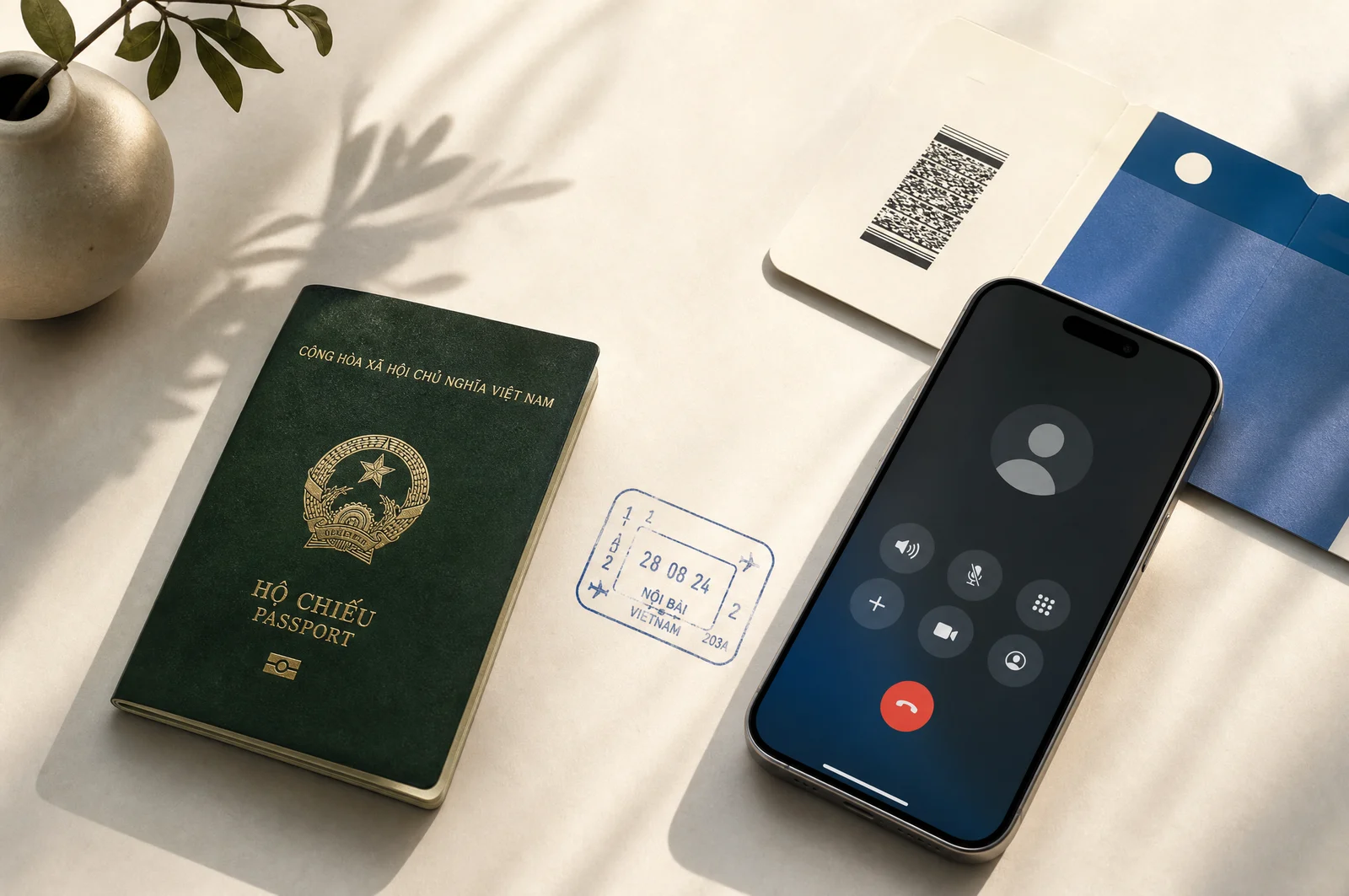
Extension vs. a brand-new e-visa: which one actually applies to you
Whether you extend your current visa or just get a new one depends on your visa type and how you entered. E-visas and tourist visas have different handling: some short stays are easier to replace with a fresh e-visa from outside the country than to extend from inside, while other visa categories can sometimes be extended in place through an immigration office. The starting point is your current visa class, your entry stamp, and the expiry date in your passport.
Before assuming an 'extension' exists for your situation, confirm what your specific stamp allows. Vietnam's e-visa rules and the maximum stay have been adjusted more than once in recent years, so what a forum post said last year may no longer be true. Confirm your eligibility with the immigration office or a reputable agency rather than relying on old advice, and have your passport and current visa details in front of you when you ask.
Why extensions usually run through a local agency or sponsor
In practice, in-country visa extensions in Vietnam are commonly handled through a registered visa agency, your hotel, or a sponsoring company rather than walked through entirely on your own. The immigration system often expects a local sponsor or 'inviting' entity on the paperwork, which is why many travelers pay an agency to file the extension for them. This is normal, but it also means quoted prices and turnaround vary a lot between providers.
Because agencies set their own service fees on top of the government fee, it pays to ask a couple of them the same questions before choosing. A short call lets you compare what's included, whether they hold your passport during processing, and how they handle delays. Confirm exact pricing, what documents they need from you, and any guarantees directly with the agency, since these details differ between providers and change over time.
What to confirm on the call before you commit
Use a call to nail down four things: eligibility, required documents, total cost, and processing time. Ask whether your specific visa type can be extended or whether you need a new e-visa, exactly which documents and photos they need, the full fee broken into government and service portions, and how many working days it takes. Also ask what happens if your visa expires while the application is being processed, since overstaying can carry penalties.
The practical hurdles are timezone and language. Vietnam offices keep local business hours and weekday schedules, and front-desk staff may answer faster in Vietnamese, so calling from another country at the right local time and being able to communicate clearly makes a real difference. This is exactly the kind of call where having someone place it for you in the right hours and language, read your visa and passport details off the documents you attach, navigate the menu or hold, and report the answer back in a summary saves a wasted trip or a missed deadline. Treat anything you're told as guidance to verify, not legal advice, and reconfirm close to your filing date because rules change often.