AI calling agent

Set up utilities in a country you just moved to in the local language.

You arrived, you have keys, and the lights need switching on — but the electricity company only answers in the local language, during local hours. Our AI voice agent makes the call for you, speaks their language with live translation, sets up the account at your new address, and confirms when the power comes on.

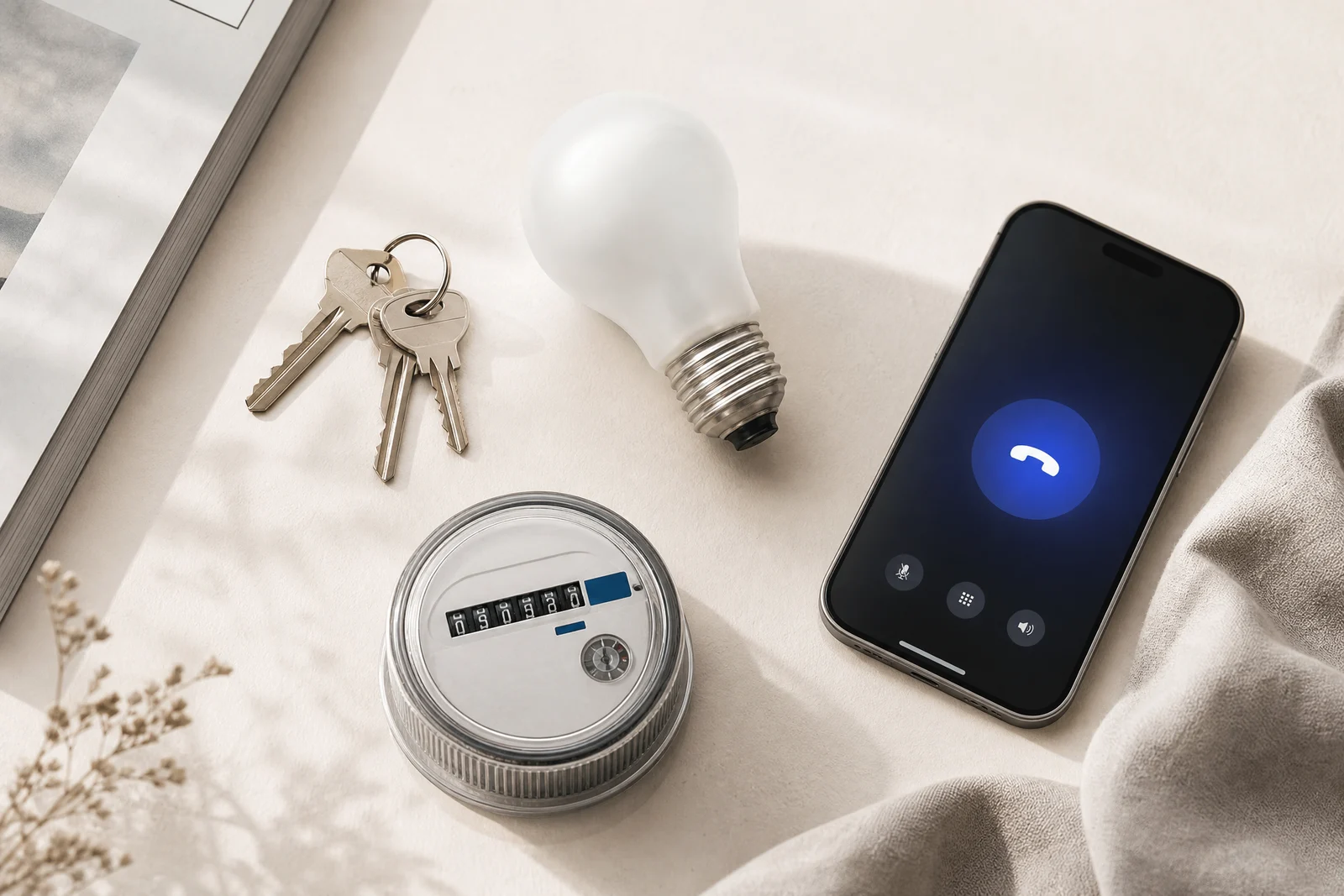
A set of new house keys, a frosted light bulb, an electricity meter dial, and a phone on a call
Short answer

After moving abroad, the core utilities to arrange are electricity, gas (where used), water, and internet/broadband — water is often already connected and billed by the landlord or municipality, while electricity and internet usually need a fresh account in your name. Providers typically ask for your new address, move-in date, a copy of ID or passport, the meter number plus a current reading, and a local bank account or IBAN for direct debit, and because these calls run through local hotlines with regional accents and country-specific terminology, an AI agent that handles the call in the local language can get the account opened without you needing to be fluent.

Updated June 2026
The problem

Getting connected is a maze when you just arrived

Utilities are one of the first things you need after moving, and one of the hardest to sort out. The provider picks up in a language you barely have, asks for a meter number and a move-in date, and routes you through a menu that assumes you already know how their system works.

So the lights, the heating, the internet all wait — because making one phone call in an unfamiliar language feels harder than it should. You put it off, and the to-do list of a new home just gets longer.

Which utilities to set up first, and which are already on

Prioritise electricity and internet, since these almost always require a new contract in your name and internet has the longest lead time. Gas matters only if your home uses it for heating or cooking, which varies widely by country and even by building. Water is frequently the simplest: in many apartments it is included in service charges or handled by the municipality, so you may only need to register rather than choose a provider.

A practical first step is to ask the landlord or previous tenant which utilities are bundled into rent and which you arrange directly. In many countries the prior occupant simply closes their account and you open a new one at the same meter, so confirming whether the supply is currently live (and under whose name) saves you from being double-billed or from arriving to a disconnected property.

The exact information providers ask for on the call

Have your address, move-in date, ID, meter number, and a meter reading ready before you call, plus a local bank account or IBAN. The meter number is printed on the meter itself or on a previous bill, and giving an opening reading on the move-in date is what stops you paying for the prior tenant's usage. For internet there is usually no meter, but providers will ask for the address to check which lines and speeds are available.

Payment is the step that catches newcomers out. Many providers, especially in Europe, set up billing by direct debit (SEPA in the eurozone) and may be reluctant to activate service without a local or compatible bank account. Opening that account is often worth doing before the utility calls; if you don't yet have one, ask whether card payment or invoice-by-mail is allowed as an interim arrangement, as policies vary by provider.

Choosing a tariff and what activation timelines look like

Compare tariffs on the contract basics — fixed versus variable rate, contract length, and any standing charge — rather than headline per-unit prices alone. In deregulated markets you can usually pick your electricity or gas supplier, while in others the local utility is effectively the only option. For internet, the deciding factor is often which technology actually reaches your address (fibre, cable, or DSL), so the available speed can matter more than the brand.

Timelines differ by utility and country, so ask for a specific activation date during the call. Electricity and gas at an existing, live meter can sometimes switch to your name quickly, whereas internet often involves scheduling a technician or shipping a router and can take noticeably longer. Because these calls go to local-language hotlines using country-specific terms for meters, tariffs, and connection types, doing the call in the local language — directly or via an agent — tends to be the difference between a smooth activation and a misunderstood account.

Listen live · steer mid-call

Watch the call happen.

A preview of how this call plays out. On a real call you listen live, type to steer the agent, and get the full transcript after.

Stadtwerke

Calling… connecting you

How it works

Three steps. About a minute of your time.

01

Say what you need

Tell the agent in your own words — e.g. “Set up an electricity, gas or internet account at your new address — in the provider's own language — and confirm the start date and what they still need from you.”. Attach a document if it helps, and pick the language it should speak.

02

It makes the call

The agent dials, gets through the phone menu, waits on hold, and handles the conversation on your behalf — politely and persistently.

03

You get the result

Listen live and steer mid-call if you want, or just read the transcript and summary when it’s done — translated into your language.

Built for real calls

It handles the parts you dread.

Speaks the local language

The agent calls in the provider's own language with live translation, so the call happens on their terms — not yours. It works across 100+ languages, so it does not matter which country you just moved to.

Waits through the menu and the hold

Utility lines mean phone trees and long hold music. The agent navigates the menu, waits on hold for as long as it takes, and only needs you when there is something to decide.

You step in for the personal details

When they ask for your name, your meter number or your bank details, you listen in live and step in to give them yourself — the agent handles the rest of the conversation.

Questions

Setting up utilities abroad by phone

How do I set up electricity after moving to a new country?

You contact the local utility provider for your address, give them your move-in date and your meter reading, and they activate supply to the property. The hard part is usually the call itself, because providers answer in the local language during local business hours. The AI agent makes that call for you, speaks the provider’s language, gives them the address and meter details, and confirms the start date.

Can I set up utilities if I do not speak the local language?

Yes. The agent speaks the provider’s own language with live translation, so you can arrange your electricity, gas or internet without speaking a word of it. You follow the conversation in English in real time and step in only for personal details like your name or bank account.

What information do I need to set up a utility account?

Most providers ask for the full property address, your move-in date, the meter number and the current meter reading, and your contact and payment details. Have those ready before the call; the agent gives the provider what it can and lets you supply the personal details yourself when they are asked for.

How much does it cost to use the AI agent for the call?

It is pay-as-you-go, billed per minute, and you see the per-minute rate before the call connects. You only pay for the time you are actually on the line with the provider, including any time spent on hold.

Related

Other calls the AI can make

Ready when you are

Switch the lights on in your new country.

Send the AI to call